 Airplane Fly

Beyond sealed runways: remote strip discipline in the Red Centre
How station managers navigate CASA licensing while respecting the unforgiving geometry of central Australian terrain.

Critiques, designer discourse and ecological reflections touching the pulse of Australian regional aviation and private flight architecture.
How station managers navigate CASA licensing while respecting the unforgiving geometry of central Australian terrain.

Battery-electric trainers and short-hop commuters prioritising locally sourced energy over carbon-intensive imports.

Maintaining reliable schedules across sectors where weather, payload and runway length interact unpredictably.
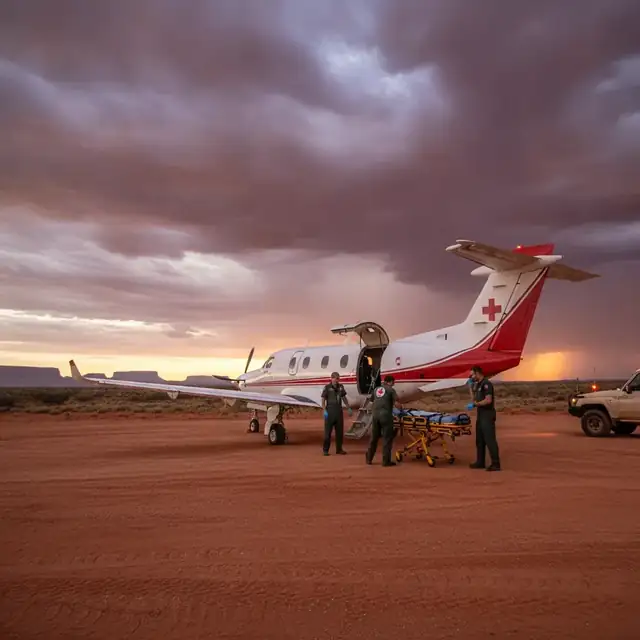
RFDS coordination models as blueprints for medical access on properties hours from sealed roads.
A deep investigation into how modern spatial planners and station managers navigate CASA licensing requirements to create dynamic, contemporary access profiles while respecting the unforgiving geometry of central Australian terrain.
The pastoral holdings of the Northern Territory and western Queensland depend on aviation in ways that coastal operators rarely appreciate. A 1,100-metre gravel strip that serves a cattle station during the dry season may become unusable after three days of January rain. Operators who treat these strips as extensions of sealed aerodromes invite incident reports that ripple through insurance markets for years.
Experienced pilots distinguish between three operational categories that rarely appear on official charts:
Airplane Fly's advisory notes for Red Centre corridors always include strip category confirmation as a pre-departure checkpoint, not an afterthought.
At Alice Springs in summer, density altitude routinely exceeds 5,000 feet by mid-afternoon. Twin-engine turboprops configured for sea-level eastern bases arrive with performance margins that evaporate under heat and dust. We recommend scheduling critical departures before 10:00 am local time during October through March, with fuel reserves calculated against rejected take-off scenarios on shortened effective runways.
Exploring the minimalist shifts that prioritise locally sourced renewable energy and short-sector commuters over carbon-intensive ferry routes between coastal hubs and island communities.
Bundaberg, Rockhampton and Townsville have become unlikely laboratories for battery-electric and hybrid-electric trainers. CASA's evolving guidance on electric propulsion certification creates both opportunity and uncertainty for regional operators considering fleet renewal.
We do not present electric aviation as a guaranteed cost saving. Operating economics depend on sector length, utilisation rates and local electricity tariffs — variables that require site-specific modelling before capital commitment.
Structural engineers and route planners unpack the intricate mechanics of maintaining reliable schedules across sectors where weather, payload and runway length interact unpredictably.
The Tamworth–Longreach–Mount Isa triangle exemplifies Australia's regional connectivity challenge. A 19-seat commuter on a Monday morning may depart full with mining crew, while Friday's return leg faces headwinds that force fuel stops at Charleville. Operators who publish fixed timetables without disclosing payload restrictions create customer expectations that private aviation advisory clients should not replicate.
Our editorial standard favours operators who publish typical usable load by season and direction. Investors reviewing fractional or charter participation should request six months of actual load factor data, not marketing brochures showing four passengers in a spacious cabin.
How historical Royal Flying Doctor Service coordination models provide modern estate managers with blueprints for medical access structures on properties hours from sealed roads.
Large pastoral holdings and eco-tourism lodges increasingly ask whether private aircraft ownership can substitute for RFDS membership and contracted aeromedical retainer agreements. The answer is rarely simple. RFDS provides integrated clinical capability; a privately operated PC-12 with a corporate pilot does not.
Airplane Fly publishes these frameworks as educational material. Implementation requires qualified medical, legal and aviation professionals in each jurisdiction.